GIN Conference 2025
September 16, 2025
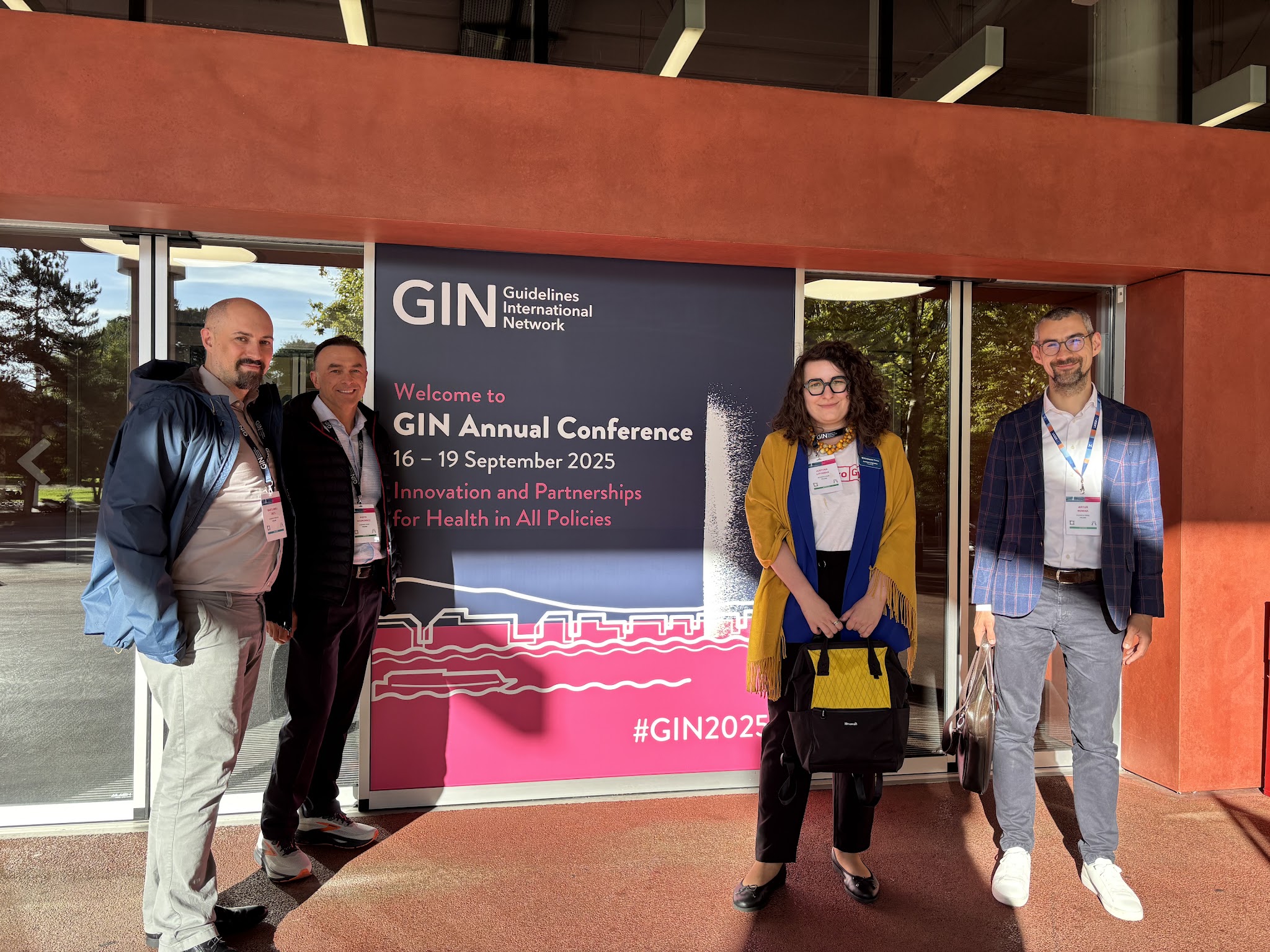
Evidence Prime joined the guideline community at GIN 2025, held from 16 to 19 September at PALEXPO in Geneva. Artur Nowak, Bartłomiej Dietl, Justyna Lityńska and Piotr Oczkowicz represented the team, bringing work on AI-assisted communication and the presentation of guideline evidence.
Artur presented AI and Plain Language Summaries: Three Years of Progress and Persistent Challenges (2022–2025), co-authored with Ewa Borowiack, Ewelina Sadowska and Jan Brożek. The study revisited earlier work on generating accessible explanations of recommendations and examined both readability and factual accuracy.
The findings showed why those two questions need separate evaluation. More readable text could still introduce oversimplifications or misinterpretations. The conference abstract therefore emphasised the need for human supervision. This was an evaluation of a particular summary-generation approach, rather than evidence that AI summaries could be used without checking.
Justyna and Bart led an interactive workshop on Visual Clinical Guidelines, the digital presentation approach developed with the American College of Physicians. Participants explored how complex guideline information could be presented clearly while keeping the supporting evidence accessible.
Bart also shared lessons from developing GRADEpro’s network meta-analysis tools. The work brought user-centred design into a methodological problem: how to present comparisons among multiple interventions in a way that guideline teams can understand and assess. Artur additionally chaired two sessions, covering digital innovation in guideline development and approaches to planetary health.
These contributions connected several stages of the same process. Evidence needs to be assessed rigorously, presented in a usable format and explained accurately to its intended audience. Better software and clearer language can support that work, while the underlying judgments and their limitations still need to remain visible.
Read our overview of the accepted contributions and Artur’s conference reflections for more from Geneva.
