HTAsiaLink Conference 2026
September 1, 2026
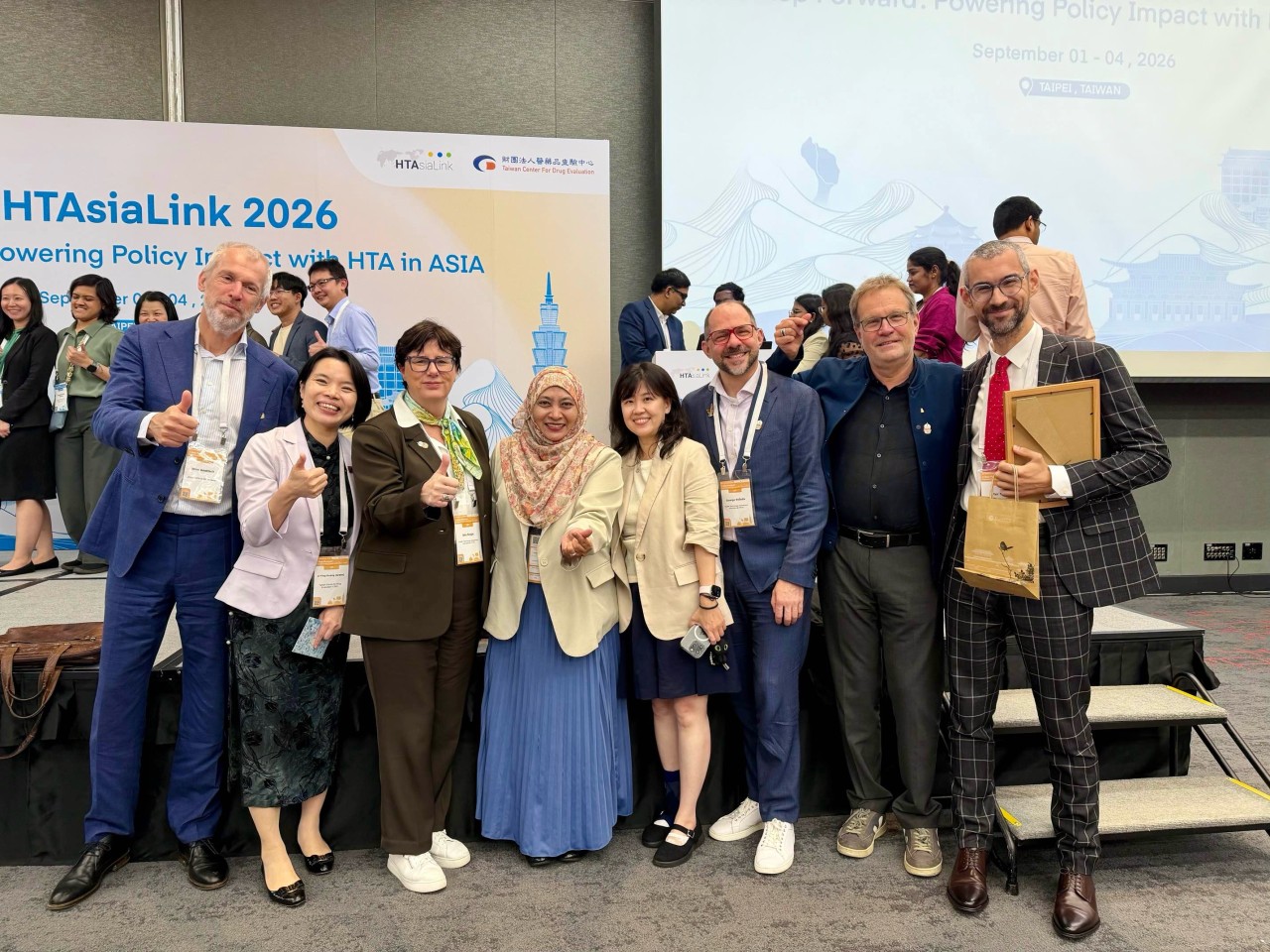
Artur Nowak joined the 13th HTAsiaLink Conference in Taipei, Taiwan, where the regional health technology assessment community examined how research can have greater impact on policy. The event ran from 1 to 4 September 2026, including preconference workshops, under the theme “A Step Forward: Powering Policy Impact with HTA in Asia.”
On 4 September, Artur contributed Sharing Session 4, “Responsible AI for HTA: Human-in-the-Loop Evidence Synthesis, Validation, and Governance.” His presentation considered what HTA agencies need to know before accepting AI-assisted evidence or introducing AI into their own evidence work.
The central argument was that automation increases the importance of review setup. Experienced reviewers often resolve incomplete instructions using context that is absent from the written protocol. When AI applies a rule repeatedly, an unstated assumption can become a systematic error. Making definitions, boundary cases and escalation rules explicit therefore becomes part of the assurance process.
Artur discussed two complementary kinds of validation: evidence about a method across previous reviews, and checks within the review being conducted. The first can establish how an approach behaves across tasks and settings; the second can identify disagreements, missing source support and cases that need expert attention. Neither a strong benchmark nor a few local checks can answer every question about reliability.
The presentation also distinguished assistance from decisions to automate or omit work. Those choices have different consequences, so the supporting evidence and safeguards should reflect the task and the risk of error. This was a proposed approach to assurance, rather than a claim that every part of the workflow had already been validated.
Alongside the sharing session, Artur served as a commentator during Thursday’s oral and poster sessions. His conference preview raised a practical question for the community: what assurance should an HTA agency require before it relies on AI-assisted evidence synthesis?
Read Artur’s reflections after HTAsiaLink and GIN for more on the connections between these discussions.
